Global Money Market Outlook 2026: Navigating a New Era of Monetary Equilibrium

Global Money Market Outlook 2026: Navigating a New Era of Monetary Equilibrium
As we approach the fiscal year 2026, the global money market stands at a critical juncture. After years of navigating through the volatility of post-pandemic recovery and the subsequent aggressive tightening cycles by central banks, the landscape is now shifting toward a phase of relative stabilization. This outlook explores the key drivers that will define the money markets in 2026, focusing on interest rate trajectories, liquidity conditions, and the evolving regulatory environment.



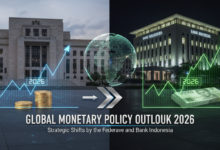


The Stabilization of Central Bank Policies
By 2026, the aggressive interest rate hikes that characterized the 2022-2024 period are expected to have fully transitioned into a ‘higher-for-longer’ plateau or a gradual easing phase, depending on the specific economic jurisdiction. The Federal Reserve and the European Central Bank (ECB) are projected to prioritize price stability while ensuring that economic growth is not stifled. In this environment, money market participants can expect a more predictable yield curve, facilitating better short-term investment planning.
Key factors influencing this stability include:
- Inflation Normalization: Global inflation rates are expected to converge toward the 2% target set by major central banks.
- Fiscal Policy Synergy: Improved coordination between monetary and fiscal authorities to manage national debt levels without disrupting market liquidity.
Liquidity Dynamics and Market Participation
Liquidity remains the lifeblood of the money markets. In 2026, the availability of high-quality liquid assets (HQLA) will be a primary focus for institutional investors. We anticipate a shift in the distribution of liquidity, as quantitative tightening (QT) programs reach their conclusion or reach a steady state.

Institutional participation is expected to rise in the repurchase agreement (Repo) markets. Furthermore, the diversification of short-term instruments, such as commercial paper and certificates of deposit, will provide investors with more nuanced ways to manage their cash positions while maintaining safety and liquidity.
The Impact of Digital Transformation and ESG
Two significant trends will continue to permeate the money market in 2026: digitalization and Environmental, Social, and Governance (ESG) integration. The adoption of Central Bank Digital Currencies (CBDCs) and blockchain-based settlement systems will likely enhance the efficiency of cross-border money market transactions, reducing settlement times and counterparty risks.
Simultaneously, ‘Green’ money market funds and ESG-linked short-term debt will gain more prominence. Investors are increasingly demanding transparency regarding the carbon footprint of their liquid holdings, leading to a new standard of reporting within the industry.

Conclusion: A Strategic Outlook for Investors
The money market outlook for 2026 is one of cautious optimism. While the era of ‘easy money’ has passed, the emergence of a more stable interest rate environment and the technological modernization of market infrastructure offer significant opportunities. Professional investors and corporate treasurers should remain agile, leveraging digital tools and diversified instruments to optimize their portfolios in this new era of monetary equilibrium.