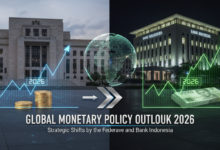
The 2026 Interest Rate Horizon: A Comprehensive Forecast for Global Money Markets ## Introduction As the global economy moves further into the mid-decade, the trajectory of interest rates remains the primary focus for institutional investors and money market participants. Following the period of intense volatility and inflation management seen in the early 2020s, 2026 is anticipated to be a year characterized by the pursuit of a new neutral equilibrium.
## Central Bank Policy Projections Current projections from leading financial institutions suggest that the Federal Reserve will likely target a terminal rate range of 3.25% to 3.75% by mid-2026. This reflects a transition from a restrictive stance to one that supports long-term economic stability. Similarly, the European Central Bank (ECB) and the Bank of England (BoE) are expected to align their policies with cooling headline inflation, although structural factors within the Eurozone may necessitate a more cautious approach to rate cuts compared to the United States. ## Inflation and Macroeconomic Drivers The 2026 outlook is heavily contingent upon the stabilization of core inflation. Economists point to three primary factors: 1. Supply Chain Resilience: Improved global logistics reduce the risk of cost-push inflation. 2. Labor Market Dynamics: A balancing of labor supply and demand should mitigate wage-price spirals. 3. Technological Productivity: Integration of advanced automation and AI is expected to provide disinflationary tailwinds by increasing operational efficiency.
## Implications for Money Markets For participants in the money markets, the 2026 forecast implies a return to traditional yield curve dynamics. Institutional investors should anticipate: Yield Stability: A reduction in the frequency of emergency policy shifts will lead to lower volatility in short-term debt instruments. Liquidity Management: With rates stabilizing, the opportunity cost of holding cash will remain higher than the pre-2020 era, encouraging more strategic cash allocation. Refinancing Cycles: 2026 will be a critical year for corporate entities as many debt obligations issued during the low-rate era reach maturity, requiring refinancing in a significantly higher-rate environment.
## Strategic Conclusion In conclusion, the 2026 interest rate forecast suggests a landscape of stabilization. While the zero-bound interest rate era is unlikely to return, the market is moving towards a sustainable platform that rewards disciplined fiscal management and strategic asset allocation. Stakeholders must remain vigilant of geopolitical risks that could disrupt this path toward normalization.